Shopping cart
Your cart empty!
Loading...

Your cart empty!

Join 10k+ people to get notified about new posts, news and tips.
Do not worry we don't spam!
Feb 09, 2026 • 76 views
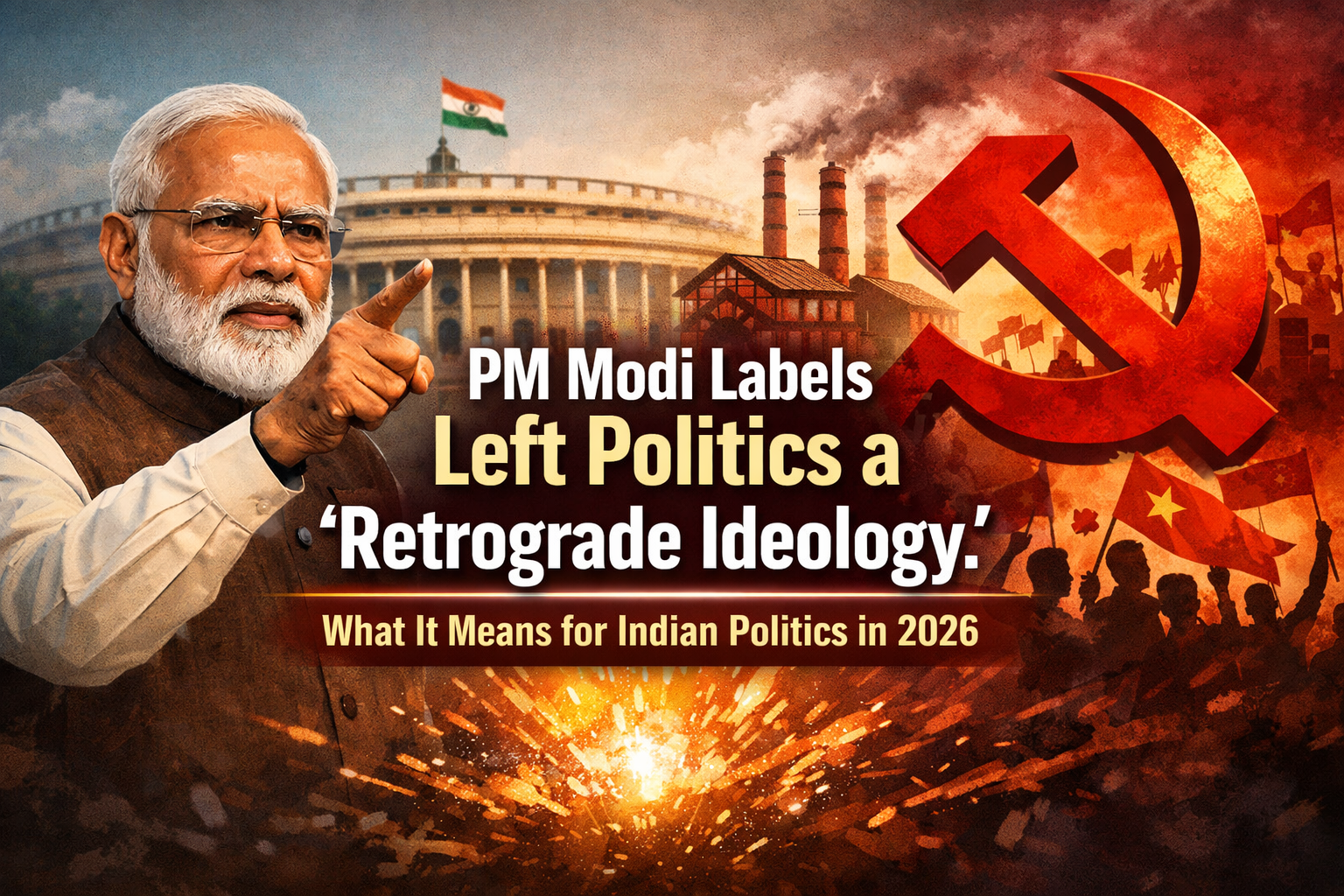
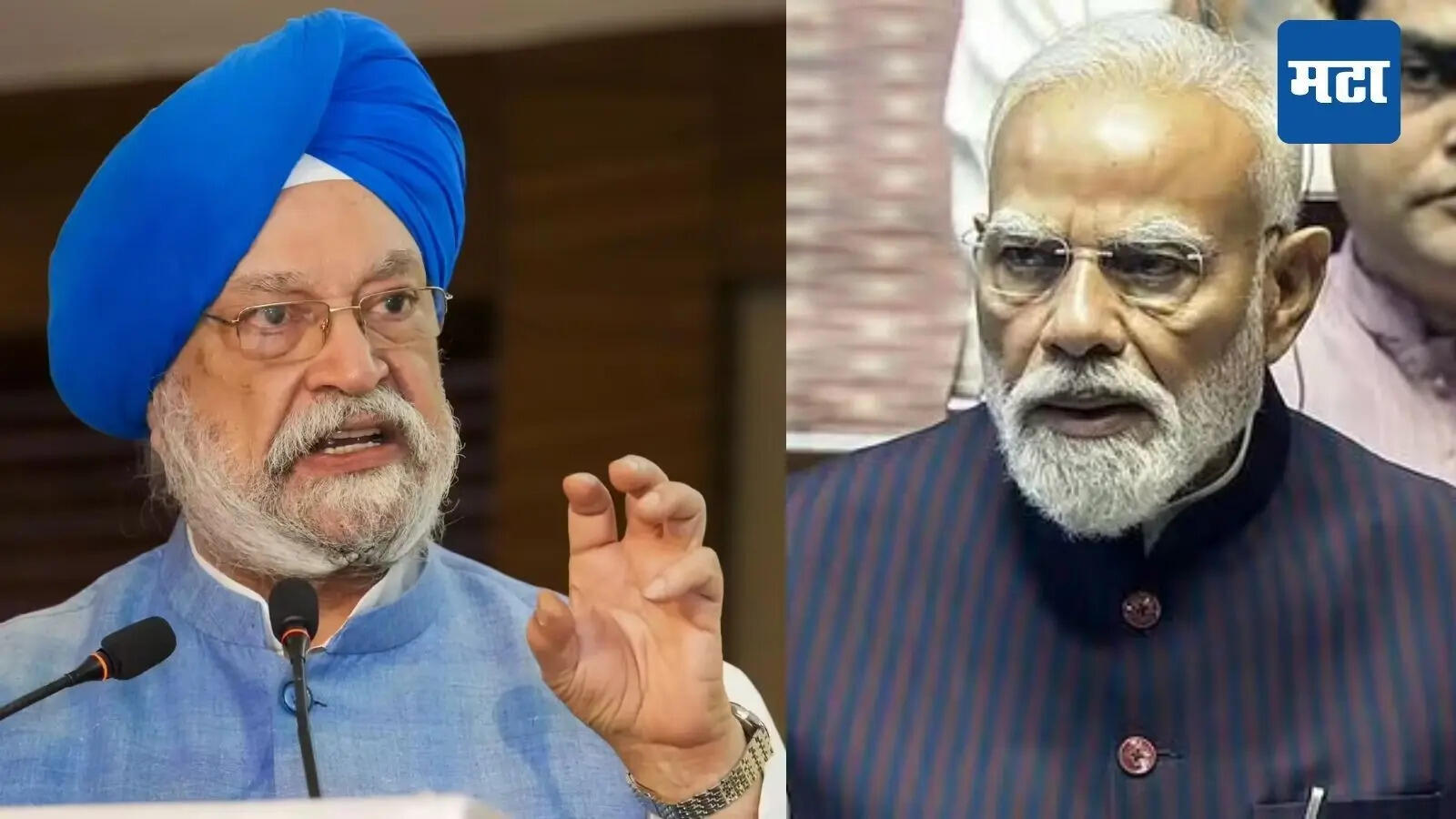
Indian politics never stays quiet for long — and Prime Minister Narendra Modi’s latest remark has once again ignited a fresh ideological debate. By calling Left politics a “retrograde ideology,” PM Modi has triggered discussions across Parliament, political parties, and the public.
But beyond the headlines, this statement holds deeper meaning. As India moves closer to 2026, it reflects shifting political narratives and the growing battle over the country’s future direction.
The word retrograde suggests something outdated or stuck in the past. PM Modi’s comment implies that Leftist ideology, in his view, no longer fits with the aspirations of a rapidly developing and modern India.
This is not just criticism — it is a political message aimed at defining what “progress” should look like in today’s India.
Left politics has played a powerful role in shaping India’s democratic history. For decades, Left parties have focused on:
Social equality and welfare
Workers’ rights and labor reforms
Public sector development
Resistance to aggressive privatization
Even though their electoral influence has reduced, Left ideologies still influence debates around poverty, inequality, and government responsibility.
As the political atmosphere heats up, Modi’s remarks could shape upcoming narratives in several ways:
The BJP continues to present itself as a party of development, modernization, and strong governance. Targeting the Left strengthens its image as forward-looking.
Indian politics is increasingly becoming a contest of ideas — nationalism vs socialism, reforms vs welfare, private growth vs state control. Comments like these deepen that divide.
Such statements may push opposition parties to defend Left politics or create stronger alliances to counter BJP’s dominance, especially in key states.
In 2026, India’s political conversations may revolve around major issues like:
Economic growth vs social welfare
Privatization vs public ownership
Youth aspirations vs traditional ideologies
National identity vs class-based politics
This remark adds fuel to those debates, ensuring ideology stays central to Indian elections.
In today’s digital age, political statements travel faster than ever. One comment can dominate news cycles, trend online, and influence voter perception.
PM Modi’s words highlight a larger truth: India’s politics is not only about elections — it’s also about competing visions for the nation’s future.
Calling Left politics a “retrograde ideology” is more than a political punch — it signals the intensifying ideological contest shaping India’s democracy. As 2026 approaches, such debates will likely grow louder, influencing policy, public opinion, and the next chapter of Indian politics.