Shopping cart
Your cart empty!
Loading...

Your cart empty!

Join 10k+ people to get notified about new posts, news and tips.
Do not worry we don't spam!
Jan 31, 2026 • 243 views
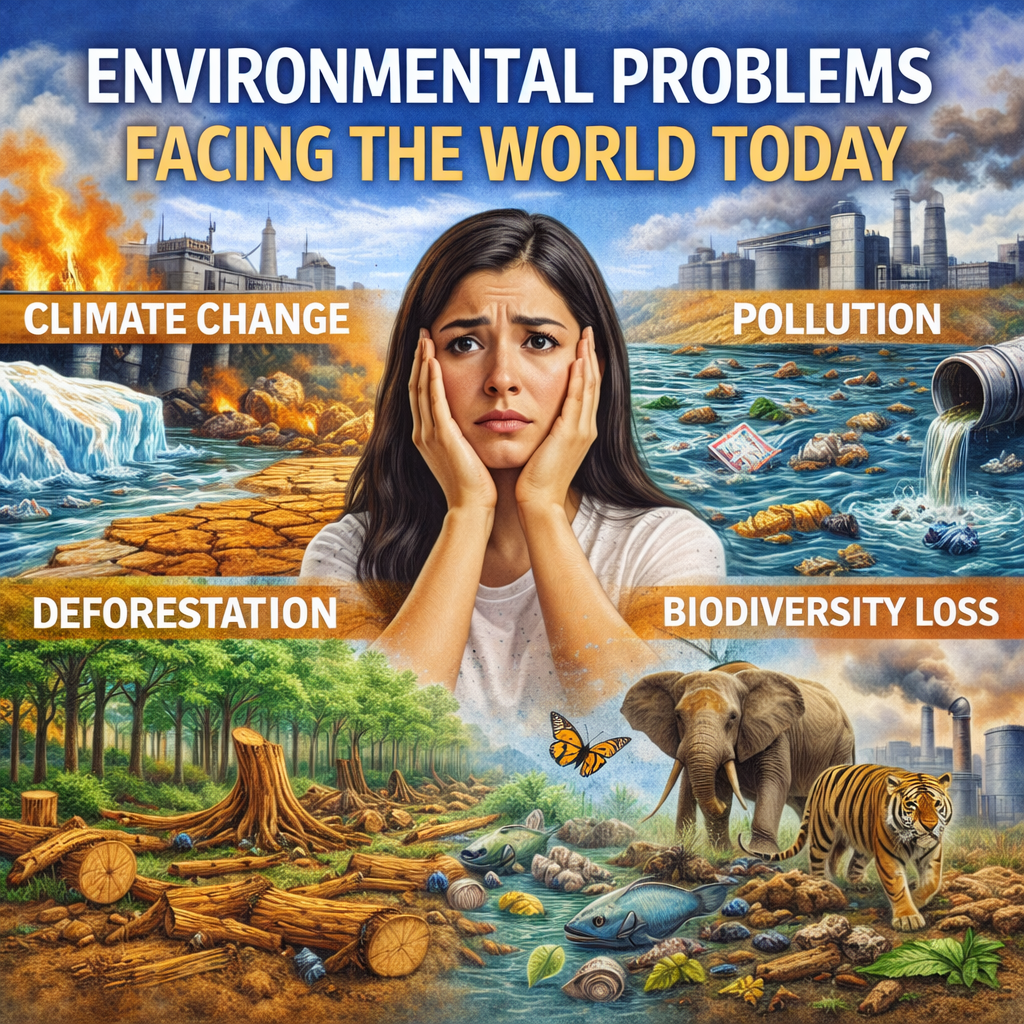
Environmental issues are growing rapidly and affecting every region of the world. Human activities, combined with natural changes, have created serious threats to the planet’s balance. These problems not only harm nature but also impact human health, economies, and future generations.
Climate change is causing rising global temperatures, unpredictable weather patterns, floods, droughts, and stronger storms. Burning fossil fuels, deforestation, and industrial emissions increase greenhouse gases, accelerating global warming and disturbing natural ecosystems.
Pollution remains a major concern worldwide. Air pollution from vehicles and factories leads to respiratory diseases. Water pollution from sewage, plastics, and industrial waste harms marine life and drinking water sources. Land pollution reduces soil fertility and agricultural productivity.
Forests are being cleared for farming, mining, and urban expansion. This destroys wildlife habitats, increases carbon emissions, and disrupts rainfall patterns. Deforestation also contributes to climate change and loss of biodiversity.
Many species are facing extinction due to habitat loss, pollution, and climate change. Biodiversity is essential for ecological stability, food chains, and natural resources. Its loss threatens the survival of both wildlife and humans.
Overuse of water resources and climate change have led to severe water shortages in many countries. Rivers are drying up, groundwater levels are falling, and access to clean water is becoming limited.
Improper waste disposal and excessive plastic use are choking oceans and landfills. Plastics take hundreds of years to decompose and cause long-term environmental damage.
Environmental problems demand immediate action. Governments, industries, and individuals must work together to promote sustainability, reduce pollution, conserve resources, and protect nature to ensure a healthy planet for future generations.